ServicesGutters
Gutter Repair and Installation in Penney Farms
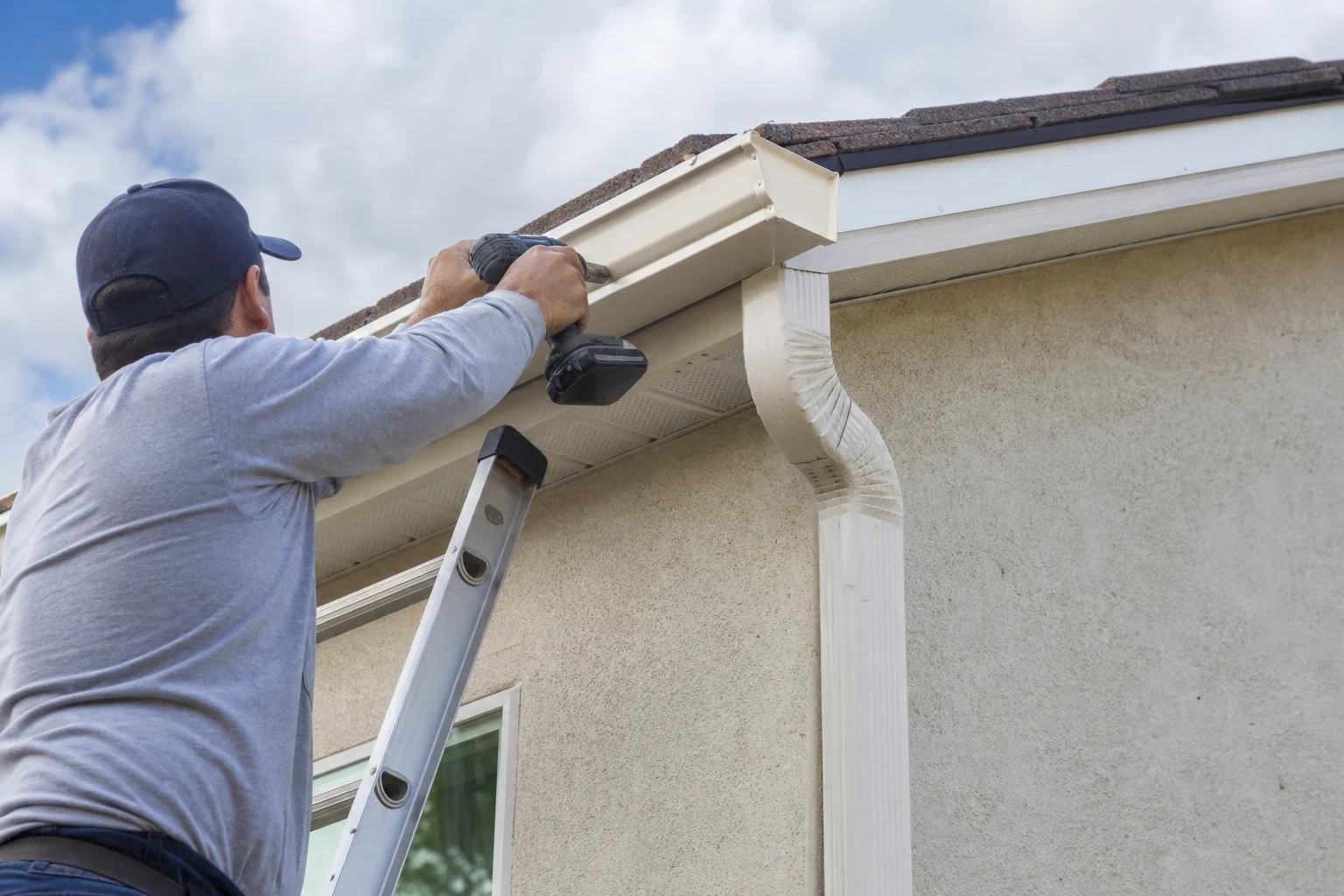
We find out why your gutters leak, sag or overflow, then fix that cause. Often it is a failed seam, a loose hanger or a clogged downspout. When the metal itself is worn out, we explain why and form new continuous gutters on site, sized for your roof.
Where Roof Water Should Go, and What Happens When It Doesn't
Gutters catch runoff at the eave and carry it to downspouts that discharge it away from the fascia, the walls and the foundation. When that path breaks, the damage tends to appear somewhere else first: rotted fascia boards, peeling paint at the eaves, soil washed out along the drip line or a damp crawlspace.
Most gutter problems are small and mechanical. A sealant joint at a corner dries out. A hanger screw backs out of soft wood. A downspout elbow packs solid with pine needles. Those are repairs, and we treat them that way. A new system makes sense when the aluminum is thin and pitted, when the runs carry so many patches that the patches themselves leak, or when the gutters are too small for the roof area feeding them. In a heavy summer thunderstorm, an undersized 5-inch gutter under a long, steep roof plane overflows even when it is perfectly clean.
What Our Gutter Work Covers
- 01
Seam and corner resealing
We clean the joint down to bare metal, strip the old caulk and apply a gutter-grade sealant. Where a rivet has failed, we put in a new one before sealing.
- 02
Re-pitching sagging runs
Gutters need a slight, steady slope toward each outlet. We reset the hangers so water drains instead of pooling mid-run, where standing water adds weight and speeds corrosion.
- 03
Hanger and fastener upgrades
Spike-and-ferrule fasteners loosen as the wood around them shrinks and swells. We pull them and install hidden hangers driven into solid framing. If the wood behind them is soft, you hear about it before we go further.
- 04
Downspout clearing and rerouting
We clear clogged elbows and outlets and check that each downspout carries water far enough from the foundation, adding extensions where the discharge lands too close.
- 05
New one-piece gutters
When a new system is the right call, we form continuous aluminum runs on site to fit your eaves. Joints remain only at corners and outlets, so there are far fewer places for water to escape.
- 06
Gutter guards
Guards cut down on clogs from oak leaves and pine needles. We'll tell you plainly which style handles your trees, and when regular cleaning is the better value.
Questions about Gutters?
Call(904) 872-5223Signs Your Gutters Need Attention
Water spilling over the front edge
Water sheeting over the lip during steady rain points to debris blocking the outlet, a run sloped the wrong way, or a gutter undersized for the roof feeding it. We check each of those.
Drips at corners and end caps
Corners and end caps are the joints most likely to fail. A drip line or a rust streak below one points to sealant that has let go.
A run bowing below the eave line
When a section droops between hangers or tilts outward from the fascia, the fasteners have loosened or the wood holding them has gone soft. A gutter full of rainwater is heavy, and a weakened section can rip loose in a strong storm.
Erosion or puddles at the foundation
Washed-out mulch, bare trenches in the soil or standing water near the slab means the downspouts are not moving water far enough away.
Peeling paint or soft fascia
Water getting behind the gutter soaks the fascia board. Paint bubbles, and the wood turns spongy when pressed.
How a Gutter Visit Works
- 1
You call and we book a time
Tell us what you're seeing, whether that's overflow, drips or a sagging section. We set up a technician visit at a time that works for you.
- 2
We inspect the whole system
We walk every run, check pitch with a level, test the fasteners and look at the fascia behind the gutter. If you'd like, we run water through it to see exactly where it fails.
- 3
You get a repair-or-replace answer
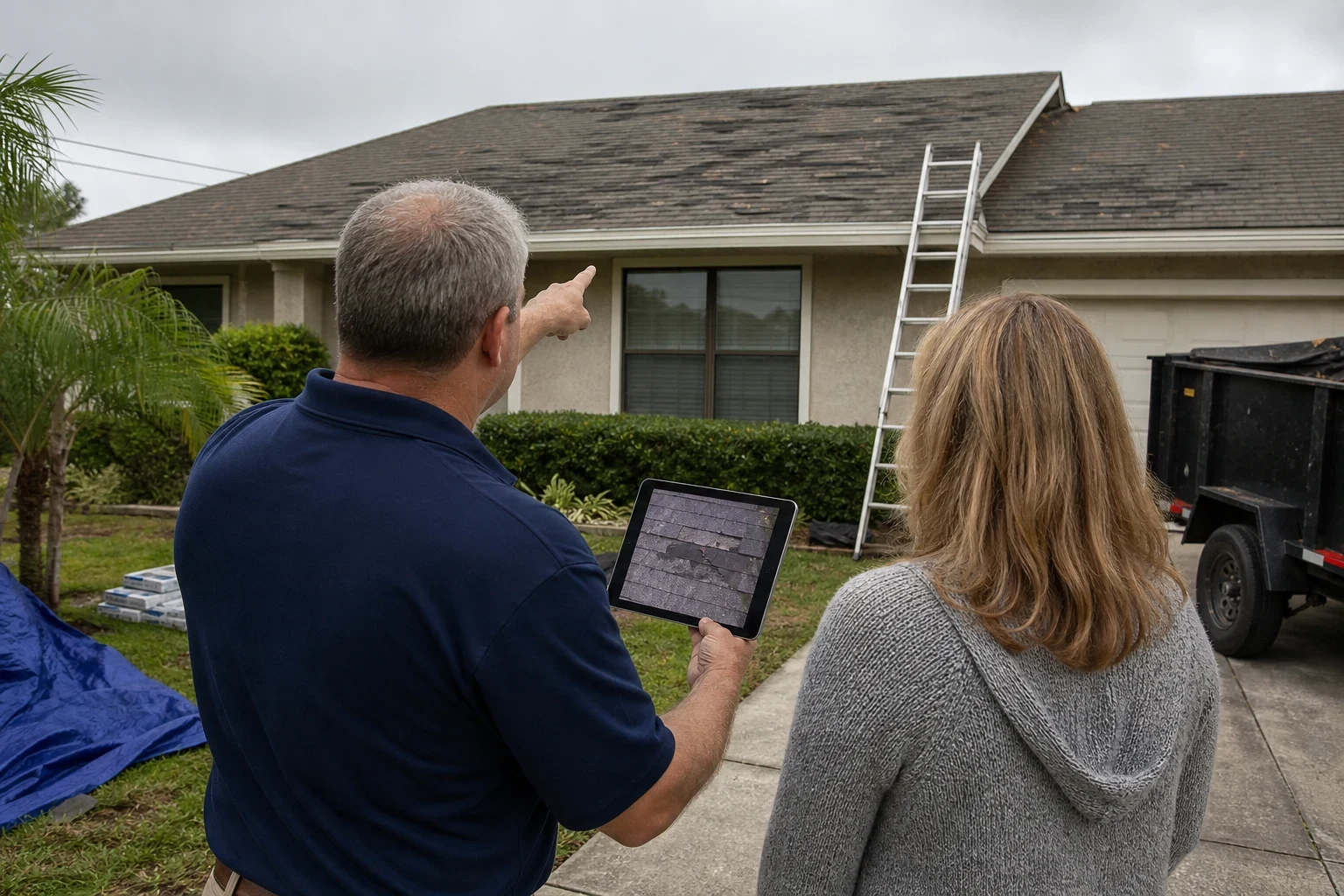
We show you photos of what we found and explain whether repair will hold or a new system makes more sense, and why. Your estimate is free and lists each item separately.
- 4
We do the work and clean up
Repairs usually take part of a day. New gutters are formed from coil and hung on site. We haul away the old material and pick up screws and debris before we leave.
What Moves the Cost of Gutter Work
Resealing a few corners and hanging a full new system are very different jobs, so we price each one from what we find on your home. Your estimate shows repair work and any replacement work as separate lines. Financing is available for larger projects.
- Linear footage and stories
- Longer runs mean more material. A second-story eave needs more ladder setup and takes more time than a single-story one.
- Gutter width and downspout capacity
- A wider gutter profile and larger downspouts take more material, yet that upgrade is often what finally stops overflow that keeps coming back. Every added corner and outlet also adds parts and labor.
- Rotted fascia
- Gutters can only be hung on sound wood, so a soft or rotted board gets new lumber first. The full extent often shows only once the old gutter is off, and we talk it over with you before that work begins.
- Guards and extras
- Gutter guards, downspout extensions and splash blocks are optional. Each one is listed separately so you can decide.
Gutter Questions We Hear Often
Can my leaking gutters be repaired, or do they need to be replaced?
Most leaks come from seams, corners and end caps, and those can be resealed. We recommend replacement when the aluminum is corroded through in several places, when the runs are badly bent, or when the system is too small for your roof. We'll show you photos either way.
Should I go with 5-inch or 6-inch gutters?
Two things decide it: the square footage of roof draining into each run and the pitch of that roof. Steep, long planes push water fast enough to shoot past a 5-inch gutter in a hard downpour. We measure your roof and recommend the size that keeps up with it.
Do gutter guards work with pine needles?
Some do far better than others. Pine needles can slip through wide screens and sit on top of coarse mesh, so a fine micro-mesh guard usually performs best. If your trees drop mostly broad oak leaves, a simpler guard may be enough.
Why is the board behind my gutter rotting?
Usually water is getting behind the gutter. The cause may be a missing drip edge, a gutter hung too low, or overflow that runs down the back side. We fix the cause along with the wood, or the new board will rot the same way.
Is gutter work connected to my roof?
Yes. The drip edge and the bottom course of shingles feed the gutter, and problems at the eave often show up in both. If we spot shingle or flashing trouble during a gutter visit, we'll point it out and explain what our roof repair or roof inspections cover.
Get Your Gutters Draining Again
We'll pin down what's failing, walk you through the photos and price the repair before anything bigger comes up. There's no charge for the visit or the estimate.