ServicesRoof Inspections
Roof Inspections in Penney Farms
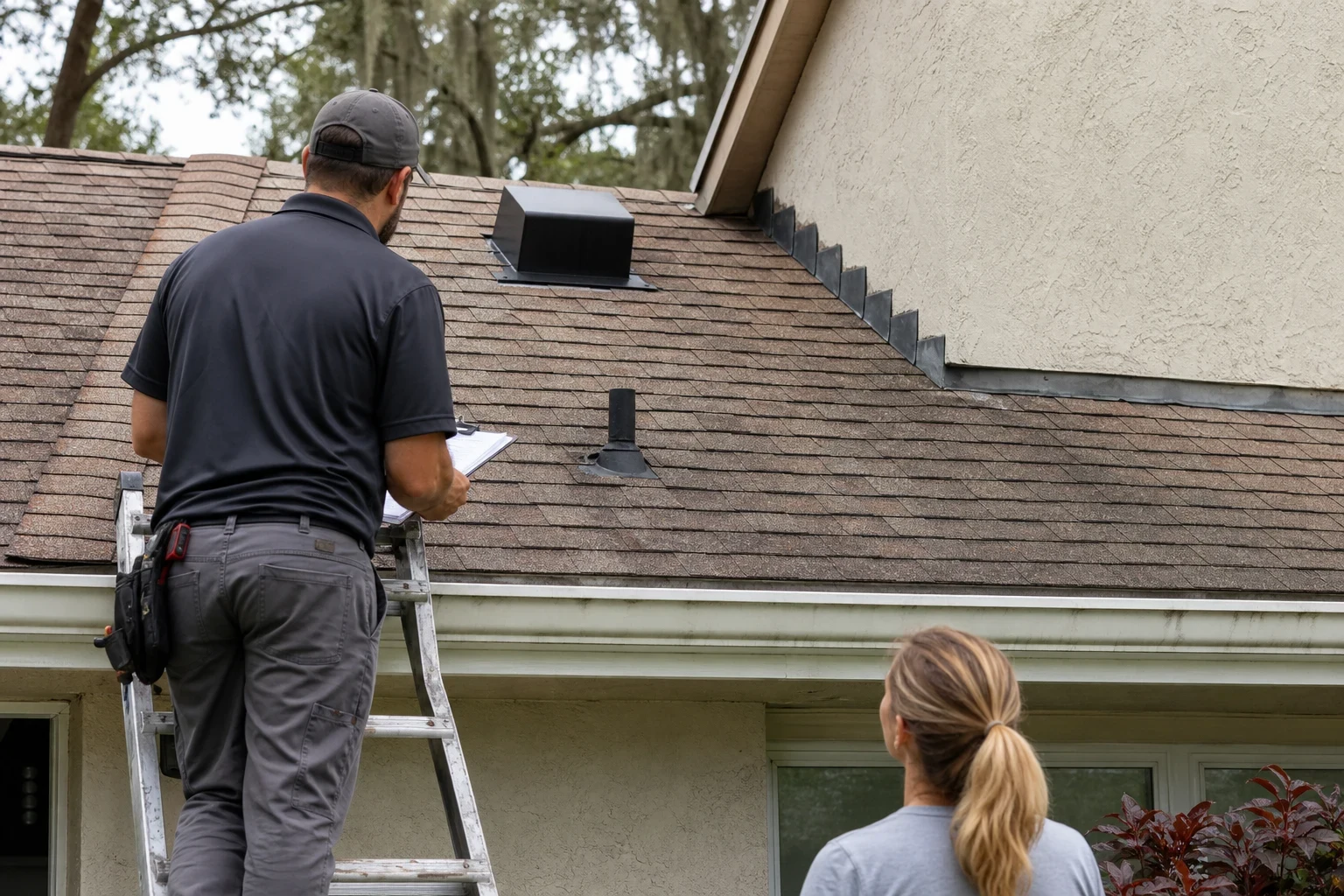
An inspection shows what is failing on your roof, what can be fixed and roughly how many years it has left. A technician goes slope by slope, looks into the attic if there is safe access, photographs each problem and tells you whether a repair will hold before anyone mentions price.
What an Inspection Is For
Roof leaks rarely start with a dramatic failure. More often a rubber pipe boot splits in the sun, a nail works loose and pushes a shingle tab up, or step flashing separates from a sidewall. Water slips in a little at a time, and by the time a ceiling stain appears, the roof deck may have been wet for months. Catching these faults early keeps a small fix from turning into rotted plywood.
Our default is to keep the roof you have. When the shingles still carry their granules and the decking feels solid underfoot, we list the repairs worth making and leave everything else alone. When the shingles crack when bent across every slope, or soft decking shows up in several areas, we tell you patching would only last a season and let the photos make the case.
Sun-facing slopes wear out faster than shaded ones under Florida summers, so we cover every side of your home, including the back slopes you cannot see from the street.
What We Check on Your Roof
- 01
Shingle surface and granules
Bare patches, curled edges, cracked tabs and blisters all get noted. Granules are what shield the asphalt from UV, so how much is left is our best gauge of remaining shingle life.
- 02
Flashing and penetrations
Pipes, vents, chimneys and sidewalls are the spots where water gets in most often. We look for step flashing pulled away from a wall, rust or lifting on chimney flashing and vent collars, and rubber pipe boots split open by the sun.
- 03
Valleys, ridge and edges
Valleys move more water than any other part of the roof, so worn or badly cut shingles there matter. Ridge caps, drip edge and the starter course get checked too, since wind usually lifts a roof at its edges first.
- 04
Decking and fasteners
Spongy spots underfoot point to plywood that has taken on water. Nails backing out and tenting the shingles above them get marked and photographed.
- 05
Attic and ventilation
Up in the attic, a technician checks for pinholes of light, stained rafters, damp insulation and mold on the underside of the decking. Weak airflow between soffit and ridge vents traps heat that bakes shingles from beneath.
- 06
Gutters and drainage
Loose hangers, a back-pitched run or a clogged downspout can push water under the roof edge and rot the fascia. If gutter work is needed, it shows up as its own line in your estimate, and our Gutters page covers it in more detail.
Questions about Roof Inspections?
Call(904) 872-5223Signs Your Roof Is Due for an Inspection
A storm just passed through
Strong gusts can fold a shingle back and crease it without tearing it off, and that crease becomes a leak later. Our post-storm inspections are free, so you can learn what changed before small damage grows.
Stains on a ceiling or in the attic
A tan ring on drywall means water has been coming in for some time. Water runs along rafters and decking before it drips, so the real opening is often several feet upslope. We locate it on the roof itself rather than guessing from below.
Grit in the gutters
Sand-like grit collecting at the downspouts is the shingle surface washing away. Some shedding is normal on a new roof; heavy shedding on an older one means the protective layer is wearing thin.
Shingles out of place
Missing tabs, raised edges or pieces lying in the yard mean the adhesive seal strips have released somewhere.
An aging asphalt roof
Once an asphalt roof has been through a dozen or so hot summers, it deserves a check even if nothing looks wrong. Worn flashing found early costs far less than decking that has rotted underneath it.
How Your Inspection Day Runs
- 1
Book by phone
On the call, describe what you have seen and roughly when it began. We pick a visit time that fits your schedule.
- 2
From the yard, then up top
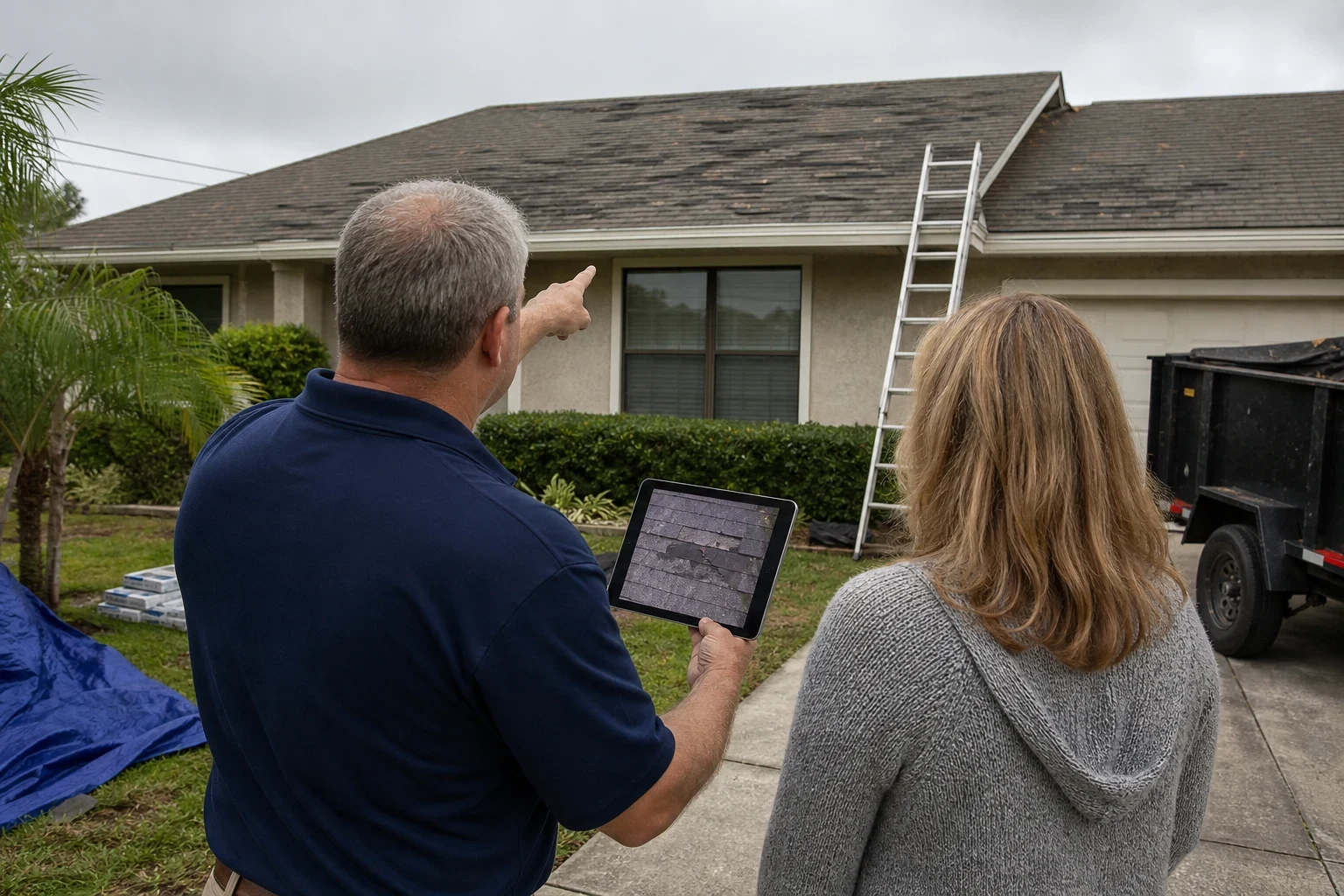
The technician first reads the roof lines from the ground, then climbs up and covers one slope at a time. Each problem is photographed wide enough that you can see where on the roof it sits.
- 3
Into the attic
With safe access, we check the decking from below along with the vents and insulation. That view often confirms a suspected leak or rules it out.
- 4
Going over the photos
We go through the pictures with you: what failed, what caused it and whether a repair will hold. If a new roof is the smarter spend, you hear the specific reasons, not vague warnings.
- 5
A written estimate if you want one
When work is called for, the estimate is written with each repair on its own line. It is a free, no-obligation estimate, so nothing is booked unless you decide to go ahead.
What Moves the Price of Follow-Up Work
You pay nothing for the inspection. The cost of any work afterward depends on what we find and how easy it is to reach. Financing is available for bigger repairs or a full roof replacement.
- Roof pitch and height
- Steep slopes and second-story eaves call for harnesses, roof jacks and extra ladder work, which adds hours compared with a low roof you can walk.
- Roofing material
- Asphalt shingle repairs, metal panel fixes and flashing work each need different parts and labor. Finding a shingle that matches an older, faded roof can also take extra time.
- What sits under the shingles
- Rotted decking or soaked underlayment adds work nobody can see until the top layer comes off. We flag the areas where we suspect it, so it is already part of the conversation before work begins.
- Number of problem spots
- One cracked pipe boot is a short job. Several failing penetrations plus worn valleys is a larger one, and past a certain point a roof replacement becomes the better use of your money.
Roof Inspection Questions
How much time should I set aside for the visit?
An average single-story roof usually takes about an hour from the moment the ladder goes up to the moment it comes down. Bigger or steeper roofs add time, and so does following a leak through the attic. We sit down with you and review the findings before we head out.
Do I need to be home?
It helps, since we may want to get into the attic or see a stain inside. If you are away, we can still check the roof from outside and talk through the photos with you over the phone later.
Will you just tell me I need a new roof?
No. We start by looking for what a repair can fix. If the roof really has reached the end, the photos show why, such as shingles cracking on every slope or soft decking spread across the roof, and the decision stays with you.
Can you help with an insurance claim after a storm?
Yes. Post-storm inspections are free, and we photograph the damage carefully. We work directly with your insurance adjuster on storm damage claims, while the adjuster decides what your policy covers. Our Storm Damage Repair page goes into more detail.
Do you inspect metal roofs too?
Yes. On metal we check panel fasteners and their rubber washers, the seams, and the trim at the ridge and eaves. Loose screws and dried-out washers are the most common leak points, and our Metal Roofing page covers that work.
How often should I have my roof inspected?
Every year or two suits most roofs, plus a check after any strong storm. Roofs past their middle years do better with a yearly visit, because failing boots and flashing get caught before they soak the decking.
Find Out What Your Roof Really Needs
A free inspection gets you photos, a straight answer on repair and no pressure to book anything. We work in Penney Farms and nearby towns such as Green Cove Springs and Middleburg.