ServicesRoof Repair
Roof Repair in Penney Farms That Fixes the Failed Part
Most leaks come from one part that gave out: a cracked pipe boot, a lifted shingle, a gap in the flashing. We find that part, show it to you in photos and repair it, and we tell you plainly if your roof is past the point where repair makes sense.
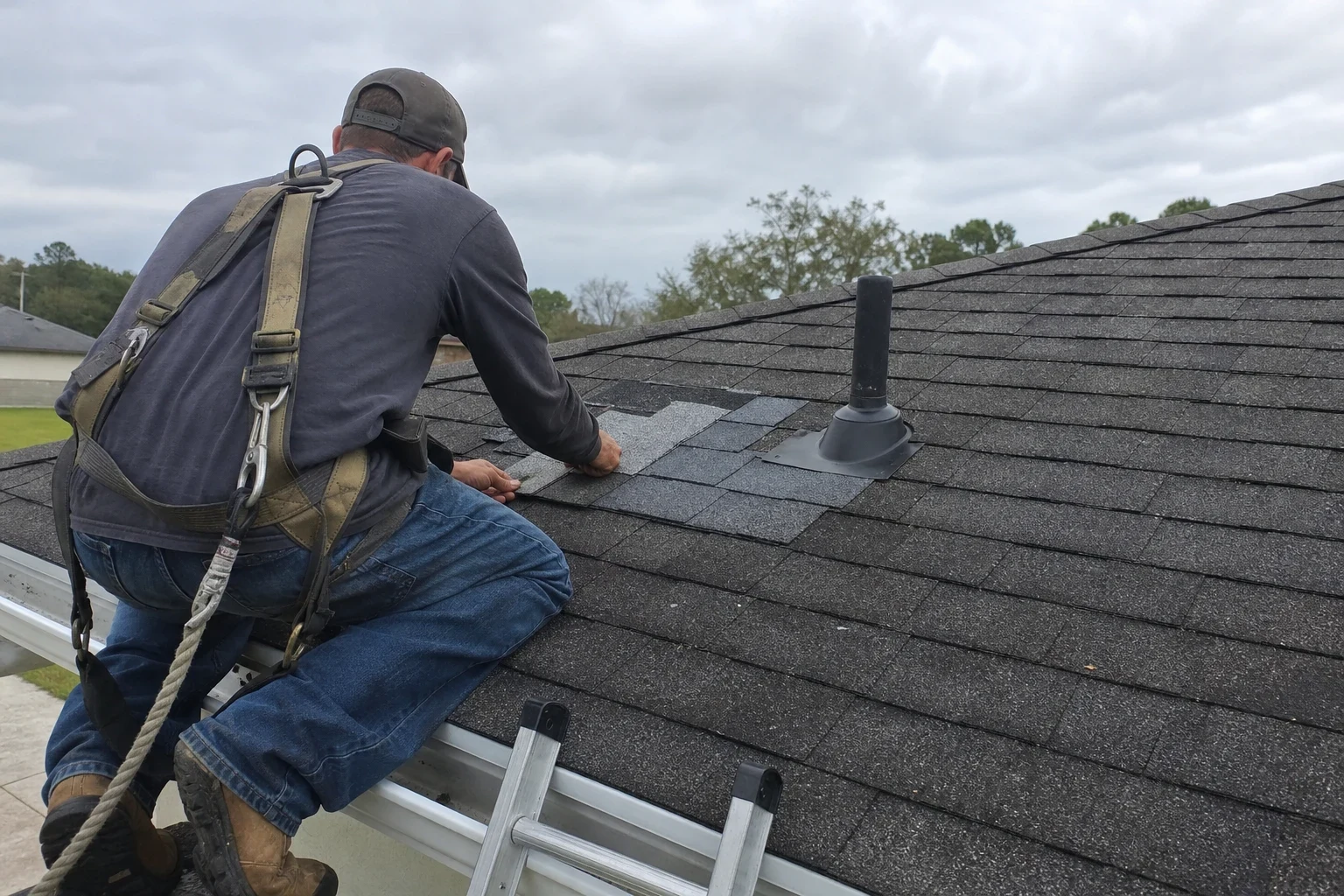
When a repair is the sensible choice
Most roofs give out at their edges and openings first, not across the whole surface. Water finds its way in where two materials meet and a seal carries the load: the neoprene collar on a plumbing vent, the step flashing along a sidewall, the valley where two slopes drain together. When the field shingles still lie flat, hold their granules and stay nailed tight, fixing that one detail stops the leak and keeps the rest of the roof working for years.
Every job starts with finding where water actually enters. That spot is often several feet uphill from the ceiling stain, because water travels along the decking and down a rafter until it finds a place to drip. Then you get a straight answer. If shingles are brittle, curling across whole slopes or dumping granules into the gutters, a patch only moves the leak, and we will say so and walk you through roof replacement instead.
Summer thunderstorms push rain sideways under shingle laps and flashing that shed straight-down rain without trouble, which is why a weak seal may leak in only certain storms. A proper repair closes that gap for good.
What our roof repair covers
- Pipe boots and vent collars
- Rubber boots around plumbing vents crack after years of sun, usually on the south-facing side. We put on a new boot instead of smearing sealant over the split, and we tuck its flange under the shingle course above so water runs over it, not into it.
- Flashing at walls, chimneys and skylights
- We renew rusted or loose step flashing, reset counterflashing and add kickout flashing where a roof edge ends against a wall. A missing kickout sends water behind the wall finish and is a common source of hidden rot.
- Shingle repair
- Wind-lifted, cracked or missing shingles are cut out and swapped for the closest match available. Each one is hand-nailed in the manufacturer's nailing zone, and its seal strip is pressed down so the tab holds in the next blow.
- Decking and underlayment
- Soft or delaminated plywood or OSB under a leak gets cut back to sound wood and new sheets go in, with fresh underlayment under the shingles. Shingling over rotted decking is how a repair fails twice.
- Valleys, ridge cap and drip edge
- We reline worn valleys, put down new ridge cap where it has cracked and straighten or add drip edge so water clears the fascia.
- Metal roof leaks
- On exposed-fastener panels we swap out screws whose neoprene washers have dried out, then reseal laps and trim. Larger metal work is covered on our Metal Roofing page.
Signs your roof needs repair
Stains on a ceiling or wall
Brown rings overhead, or bubbling paint along an interior wall, mean water has already passed through the decking and the insulation. The entry point usually sits higher up the slope than the stain itself.
Shingle pieces in the yard
Tabs or whole shingles on the lawn after a windy afternoon leave bare underlayment exposed to sun and rain.
Nail pops
Small bumps in a shingle row mean a nail has backed out, often because the decking swells and shrinks with humidity. Left alone, the nail head wears a hole through the shingle above it.
Rusted or loose flashing
Rust streaks, lifted metal or dried-out caulk at a chimney, wall or skylight are open doors for wind-driven rain.
A musty attic
A damp smell, dark spots on the underside of the decking or daylight through the boards point to a leak that has not reached the ceiling yet.
Soft or peeling fascia
Rot at the eaves often traces back to a missing drip edge or a gutter backing water under the first course of shingles.
What moves the cost of fixing your roof
The bill depends on what sits under the shingles, so we look closely at the damaged area before we put a number on paper. You get a free, no-obligation estimate in writing. If the decking proves to be in worse shape than it first looked, we pause and show you before doing any added work. Financing is available.
How far the damage has spread
Swapping one cracked pipe boot takes little time and material. Water that has been getting in for months and soaked several rafter bays means more tear-off, more decking and more labor.
The condition underneath
Wet insulation and rotted plywood or OSB have to come out and new material has to go in ahead of the shingles, and decking is priced by the sheet.
Pitch, height and access
Steep slopes need roof jacks and harnesses, and two-story eaves take more setup time than a low single-story roof.
Matching materials
Architectural shingles, discontinued colors and metal panels cost more to match than standard stock. We price the closest match and tell you how it will look.
Code and permits
Florida's building code sets how new roof work is fastened and sealed, and larger repairs may need a permit. We tell you up front if yours does and pull it ourselves.
How a repair visit runs
- 1
The phone call
You tell us where you see the problem and how long it has been there. We book a free technician visit at a time that works for you.
- 2
Roof and attic inspection
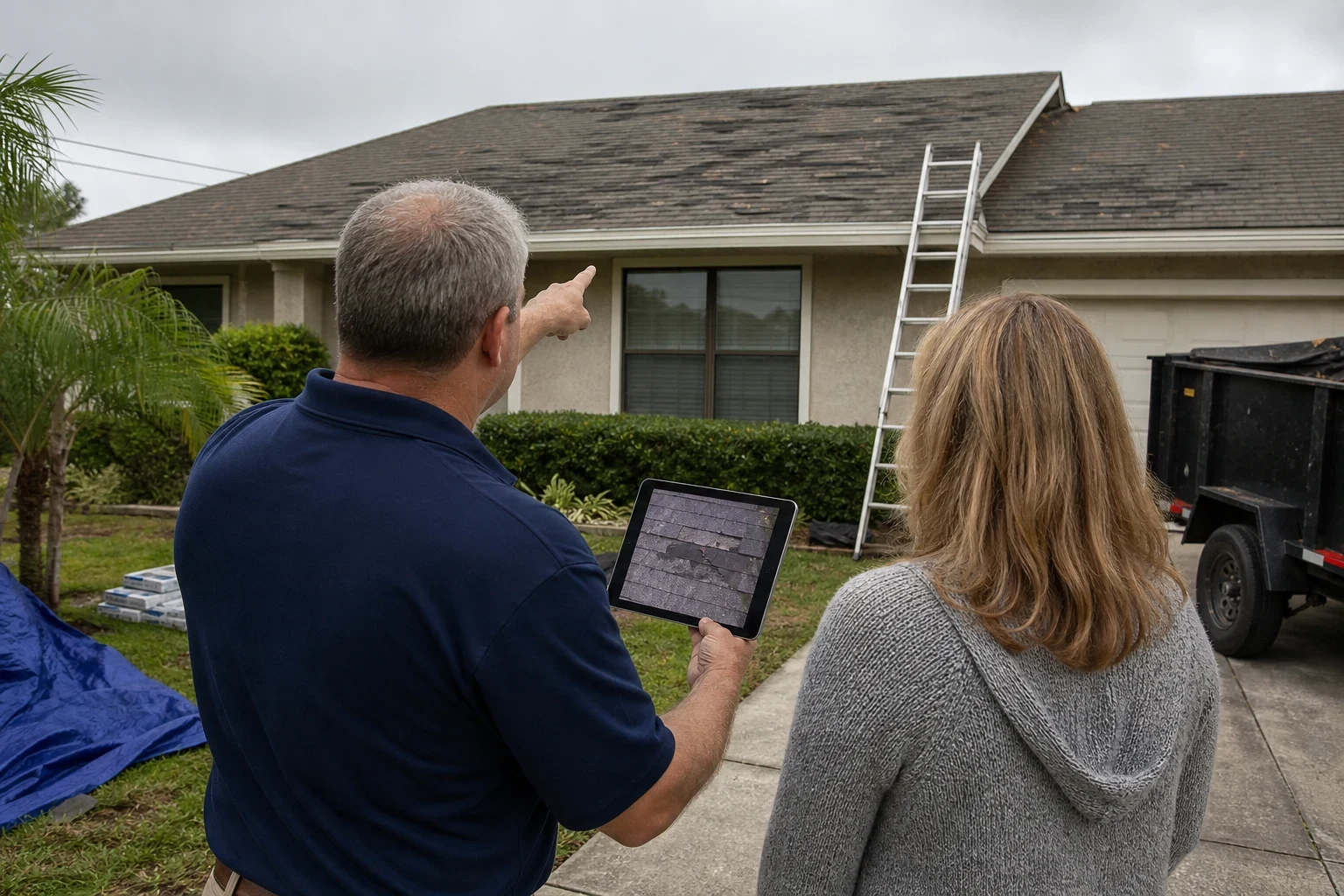
The technician checks the roof surface and, where there is access, the attic underside, tracing the path the water takes. You get photos of the failed part and the area around it.
- 3
A written estimate with a clear recommendation
We explain the cause, the repair and the price line by line. If replacement makes more sense, we show you why using the photos rather than just telling you.
- 4
The repair
Many repairs are done in a single visit. We protect plants below the work area, remove only what has failed and rebuild it layer by layer, from decking and underlayment up to shingles and flashing.
- 5
Cleanup and final photos
We pick up old shingles and nails, run a magnet over the driveway and lawn, and go over photos of the finished repair with you.
Roof repair questions
Will the new shingles match my old ones?
Close, but rarely perfectly at first. Shingles fade in the sun and product lines get discontinued, so we bring samples and choose the nearest color and profile. On a back slope the difference is hard to spot. On the front of your home we tell you honestly how it will look before we start.
My roof is about 15 years old. Is it still worth repairing?
Often, yes. Age alone does not decide it. We look at whether the shingles still flex, how much granule surface is left and whether the leaks sit at one detail or across the whole field. If the roof has good years left, repair is the sensible path; if it does not, we explain the numbers for roof replacement.
Could you just seal over the leak with caulk or roof cement?
We use sealant in small spots, such as over an exposed nail head, but it cannot stand in for a cracked boot or missing flashing. Roof cement bakes in direct sun, shrinks and splits within a few seasons, and the leak comes back. We fix the failed part so the roof sheds water the way it was designed to, and sealant is only a backup.
Will my homeowners insurance pay for the repair?
It depends on the cause. Damage from a storm may be covered, while wear from age usually is not. If a storm did it, our Storm Damage Repair page explains how we work directly with your insurance adjuster on storm damage claims and supply photos of what we find. The coverage decision belongs to your insurer.
Do I need to be home for the repair?
Not for the roof work itself, as long as we can reach the roof and any gate is unlocked. If the leak needs an attic check, someone has to let us in. Either way, we go over the finished photos with you afterward.
Get the leak traced while it is still small
A small leak soaks decking and insulation long before it shows on a ceiling. Book a free technician visit and we will find the cause, photograph it and tell you whether repair or replacement fits your roof.