ServicesMetal Roofing
Metal Roofing in Penney Farms
We install standing seam and exposed-fastener metal roofs and repair the ones already on homes. Most metal roof leaks come from screws, washers and flashing, not the panels. We check those first and tell you plainly whether a repair or a new roof makes more sense.
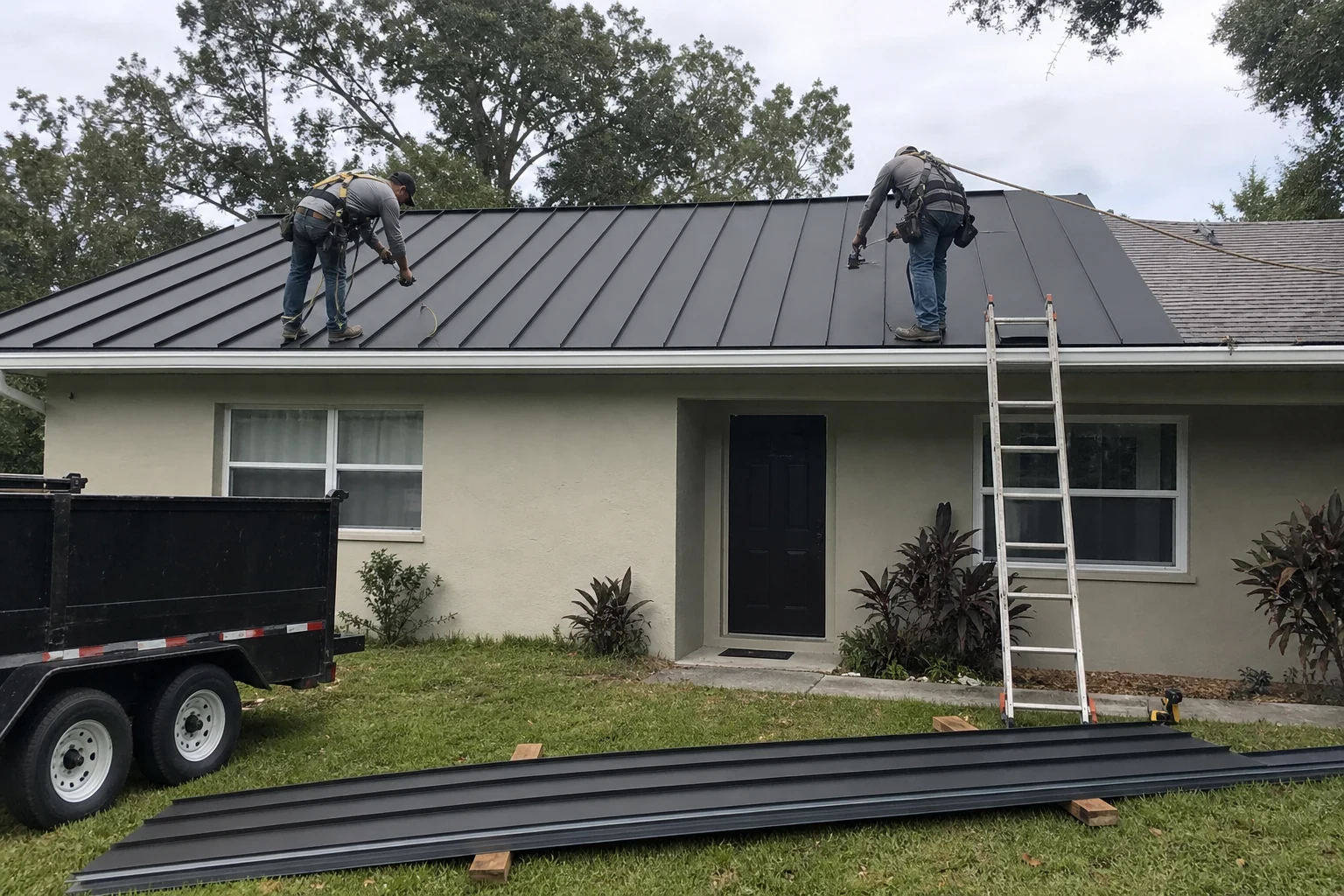
What a metal roof needs to perform
A metal roof is a system: panels, fasteners or clips, underlayment, closures, trim and flashing. The panels themselves can last for decades. The weak points are the parts that seal them, like the neoprene washers under each screw, the foam closures at the ridge and eave, and the boots around plumbing vents.
That is why we start with repair. If your existing metal roof leaks, we look at fastener rows, side laps and penetrations before anyone talks about new panels. If you have an aging shingle roof and are weighing metal, we lay out what the switch involves and when staying with shingles is the better value. Our Roof Replacement page covers that option.
We work on homes in Penney Farms and nearby towns including Green Cove Springs, Middleburg, Fleming Island and Orange Park.
What our metal roofing work covers
Standing seam installation
Concealed-clip panels let the metal expand and contract with heat without stressing the fasteners. No screws pass through the weather surface, which removes the most common leak point.
Exposed-fastener panels
Ribbed and 5V crimp panels fastened through the face with washered screws. We set screws in the pattern the wind design calls for and drive them snug, not crushed, so the washer seals without splitting.
Fastener and washer swaps
Sun breaks down rubber washers and daily heat cycling backs screws out of the purlins or deck. We pull failed screws and set new ones, upsizing where the old hole has wallowed out.
Underlayment and deck prep
A metal roof gets hot, so we use underlayment rated for high temperatures. On a tear-off we cut out and renew soft or delaminated decking before any panel goes down.
Trim, closures and flashing
Ridge cap, rake and eave trim, sidewall flashing and pipe boots are fitted to the panel profile. Foam closures keep wind-driven rain and wasps out of the panel ribs.
Signs your metal roof needs attention
Screws backing out
Raised screw heads or cracked, flattened washers let water track down the shank into the deck. This is usually a repair, not a reason for new panels.
Rust at laps and cut edges
Orange staining where panels overlap or at cut ends shows the coating is breached. Caught early, it can be treated. Rust that has perforated the panel means that section needs new metal.
Leaks around vents
Rubber pipe boots crack in the sun long before the panels age. A drip near a bathroom or kitchen vent often points here.
Rattling trim after a storm
Loose ridge cap or rake trim lets wind get under the edge, where uplift starts. If a storm has already pulled metal loose, our Storm Damage Repair page covers how we handle that.
Worn shingles and an interest in metal
Granule loss, curling tabs and repeated leaks mean the shingles are near the end. That is the right time to price metal against another shingle roof.
How a metal roof job runs
- 1
Technician visit
We walk the roof, check fasteners, laps, boots and trim, and look at the attic for stains or soft decking. You get photos of what we found.
- 2
Repair or new roof, in writing
We explain which problems a repair will fix and whether the panels have life left. If replacement is the better call, the estimate lists panel type, gauge, finish, underlayment and trim line by line.
- 3
Permit and materials
We pull the permit and order panels cut to your roof's measured lengths, which cuts down on field seams.
- 4
Install day
Old roofing comes off in sections so the deck is never left open overnight. Underlayment, trim and panels go on in order, with flashing set at every wall and penetration.
- 5
Swarf and cleanup
Cutting metal leaves tiny steel filings that rust and stain a new finish within weeks. We brush them off the panels, then run a magnet over the yard and driveway for nails and scrap.
What sets the price of a metal roof
Every metal roof is priced from your roof's measurements and the system you choose. A repair on an existing roof costs far less than new panels, which is one reason we look at that option first. Financing is available for full installations.
- Panel system
- Standing seam takes more material and labor than exposed-fastener panels, but it carries no screws through the weather surface.
- Gauge and finish
- Heavier gauge resists dents. Higher-grade paint systems hold color and resist chalking longer under strong sun.
- Roof shape
- Valleys, hips, dormers and many vent penetrations each need custom trim and flashing, which adds time.
- Tear-off and decking
- Removing old layers and renewing damaged plywood depends on what we find once the roof is open. We show you photos before any decking is swapped.
- Wind design requirements
- Florida code sets fastener spacing and clip patterns by wind exposure, and edges and corners need tighter spacing than the field.
Metal roofing questions
Something not covered here? (904) 872-5223
Is a metal roof loud when it rains?
Over a solid deck with underlayment and an insulated attic, rain sounds much like it does on shingles. The loud metal roofs people remember are usually panels on open purlins over a barn or porch.
Can you repair my metal roof instead of replacing it?
Often, yes. Fresh screws, resealed laps and new pipe boots fix most leaks we see. We recommend new panels only when the metal itself has rusted through or the system was installed wrong for wind.
Can metal go right over my shingles?
Sometimes code allows it, but we generally recommend a tear-off. Removing the shingles lets us find and renew rotted decking, and it keeps trapped moisture away from the new metal.
Does metal hold up in hurricane winds?
A properly fastened metal roof resists uplift well because the panels are long and interlocked. The fastening schedule and edge trim matter most, so we install to the pattern the wind design calls for.
Does a metal roof attract lightning?
No. Metal does not make a strike more likely, and if lightning does hit, metal is noncombustible. Lightning goes for the highest point, regardless of roof material.
Find out what your metal roof really needs
We will check the fasteners, boots and trim before suggesting new panels. If you are thinking about switching to metal, we will price it honestly against your other options.